
Available in our Web Page app. Requires App v112+.
🎯 Serve Personalized & Targeted Content
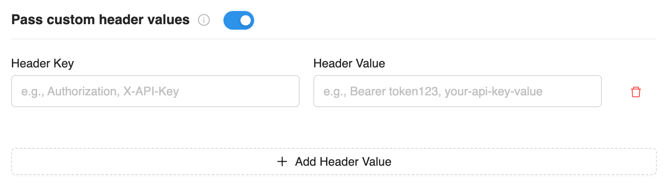
Custom headers are an excellent way to localize and personalize content without complex API integrations or changes to the webpage's URL.
- Location-Specific Content: End users can set a custom header like X-Location-ID: 1005 or X-Store-Name: Midtown-Mall. The web server receives this ID and automatically populates the webpage with relevant content, such as:
- Local Promotions: Displaying sales or offers specific to that store.
- Local Inventory: Showing real-time stock levels for that location.
- Local Announcements: Presenting region-specific news or events.
- Device/Player-Specific Content: Headers can communicate unique details about the display or player.
- Screen Orientation: A header like X-Orientation: Portrait ensures the server delivers a CSS/HTML layout optimized for the vertical screen, overriding any default layout.
- License/Player Identification: A header like X-Player-UUID: abc123def456 can be used for server-side licensing checks or for logging which specific player is requesting content.
- Audience/Time-Based Targeting: While scheduling handles time, a custom header can dynamically influence content for a specific audience. For example, a header could signal that the screen is in a staff breakroom (X-Audience: Employee) versus a lobby (X-Audience: Visitor), prompting the server to deliver internal metrics or a company newsletter, respectively.
🔒 Improve Security and Authentication
Custom headers can serve as a simple, yet effective, layer of security for restricting content access.
- Token-Based Access: End users can pass a secret key or token using a header like Authorization: Bearer [custom-token-here].
- This token is not visible in the public URL (unlike a query parameter) and is only available via the web page app, allowing the server to authenticate that the request is coming from a verified digital signage player and not a standard web browser.
- The server will only deliver the content if the custom token is valid.
📊 Enable Advanced Caching and Analytics
The header information helps the server make better decisions about data management and reporting.
- Smarter Caching: Headers can instruct content delivery networks (CDNs) or proxy servers on how to manage the content.3 For example, a header that includes a unique identifier for the content version can help ensure the display always pulls the latest update, improving performance and accuracy.
- Detailed Reporting: The server-side application can log the custom header values for enhanced analytics. Instead of just seeing an anonymous request, the end-user's analytics platform can track and report:
- "How often was the content viewed on screens with X-Location-ID: 1005?"
- "What was the uptime for players with X-Orientation: Portrait?"
In essence, passing custom header values transforms a generic Web Page display into a powerful, two-way Dynamic Data Integrator, allowing your end users to inject critical context into the content request, which the content server can use to deliver a fully customized experience.
If you need assistance with this feature, please don't hesitate to reach out.